REPLACEMENT WINDOW TYPES & STYLES
Which Window Style Is Right for Your Home?
Window style affects more than appearance. It can change ventilation,
ease of cleaning, energy efficiency, usable space and price. Compare
the most common replacement window styles before you buy.
WINDOW TYPES GUIDE
11 Common Types of Replacement Windows
Different window styles operate differently, ventilate differently and fit different rooms. Use this guide to quickly compare the most common replacement window types.
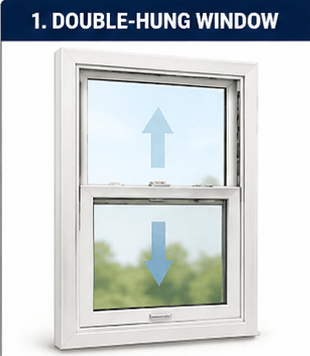
Double-Hung Windows
Double-hung windows have two movable sashes, so both the upper and lower sections can slide vertically. They are popular because they provide flexible ventilation and many models tilt inward for easier cleaning.
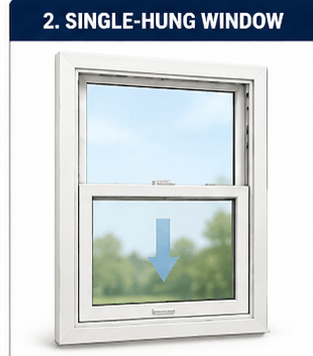
Single-Hung Windows
Single-hung windows look similar to double-hung windows, but only the lower sash moves. The simpler design can reduce cost and air leakage, although ventilation and cleaning flexibility are more limited.
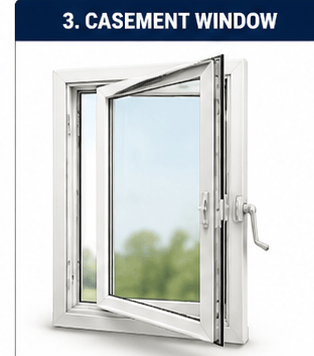
Casement Windows
Casement windows are hinged on one side and open outward, usually with a crank. When closed, the sash presses tightly against the frame, making casements a strong choice for ventilation and energy efficiency.
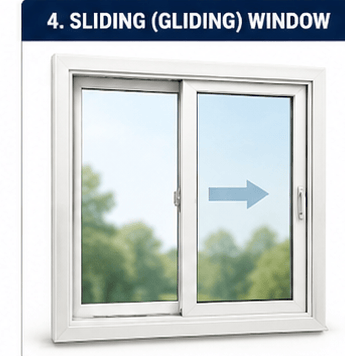
Sliding / Gliding Windows
Sliding windows open horizontally, with one or more sashes moving along a track. They work especially well in wide wall openings and are easy to operate because there is no crank or outward swing.
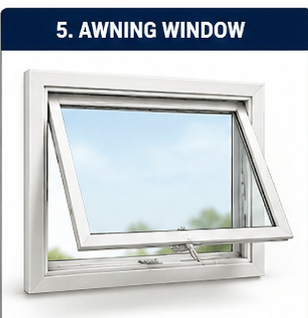
Awning Windows
Awning windows are hinged at the top and open outward from the bottom. Their shape can allow ventilation during light rain and makes them useful above counters, above other windows or in smaller wall openings.
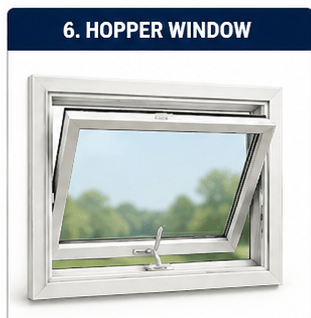
Hopper Windows
Hopper windows are hinged at the bottom and tilt inward from the top. They are commonly used in basements, bathrooms and other compact areas where ventilation is needed but wall space is limited.
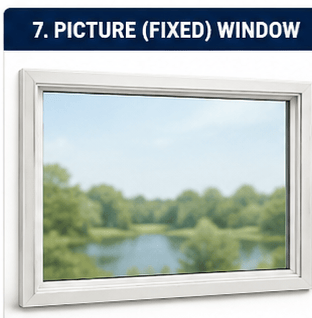
Picture / Fixed Windows
Picture windows do not open. Their fixed design provides a large unobstructed glass area, excellent natural light and strong energy performance. They are often combined with operable windows for ventilation.
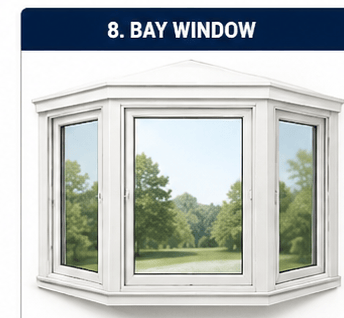
Bay Windows
Bay windows project outward from the house and usually use three sections: a large center window with two angled side windows. They can add interior floor space, wider views and a strong architectural focal point.
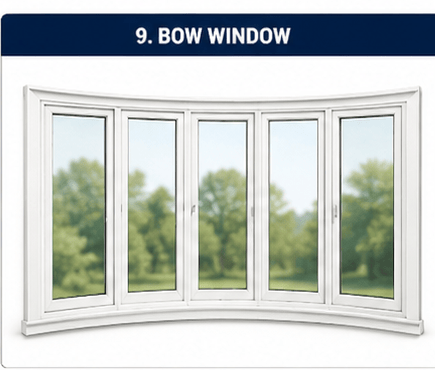
Bow Windows
Bow windows use four or more window sections arranged in a gentle curve. Compared with a bay window, the projection is typically smoother and more rounded, creating panoramic views and an elegant appearance.
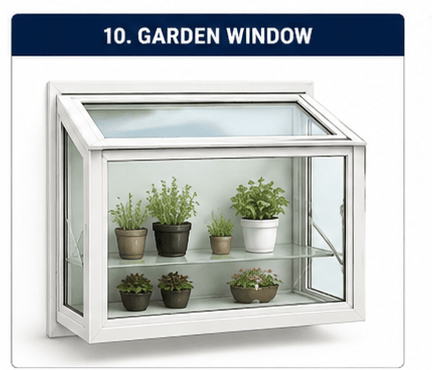
Garden Windows
Garden windows extend outward like a small glass box and often include a shelf. They are frequently installed above kitchen sinks and are popular for herbs, plants and decorative displays that benefit from extra sunlight.
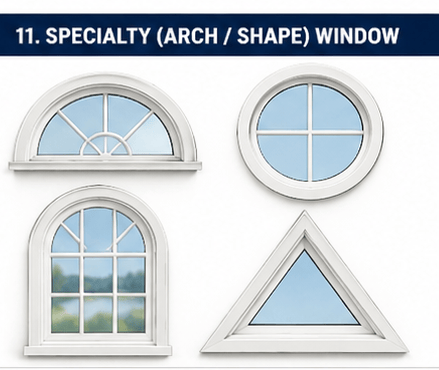
Specialty / Architectural Windows
Specialty windows include arches, circles, half-rounds, triangles and other geometric shapes. Most are fixed rather than operable and are used to add architectural character, daylight and visual interest.